The Bitcoin Standard Book Summary
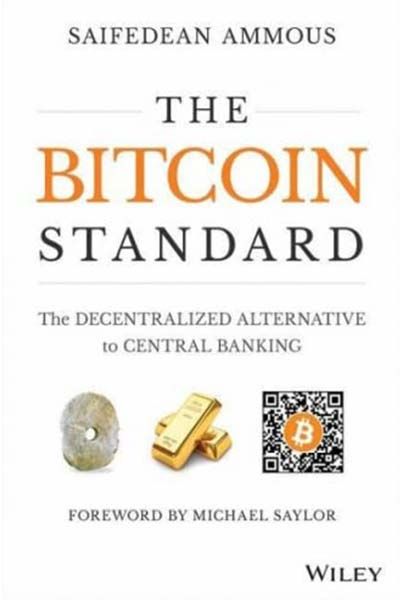
In 'The Bitcoin Standard', Saifedean Ammous explores the revolutionary concept of Bitcoin and how it serves as a new form of sound money. He delves into the historical context of money, tracing its evolution through various forms, from barter to fiat currencies. The book challenges conventional financial wisdom and posits that Bitcoin could reshape the global economy. Ammous argues that the adoption of Bitcoin represents not just a technological shift but a cultural one, emphasizing individual sovereignty and freedom. This thought-provoking read leaves readers questioning the future of money and the implications of a decentralized financial system.
By Saifedean Ammous
Published: 2018
""Bitcoin is a form of decentralized money that challenges the traditional financial system, offering individuals empowerment and the ability to take control of their own wealth.""

Start Listening to Book Summary
Book Review of The Bitcoin Standard
A comprehensive and authoritative exploration of Bitcoin and its place in monetary history When a pseudonymous programmer introduced "a new electronic cash system that’s fully peer-to-peer, with no trusted third party" to a small online mailing list in 2008, very few people paid attention. Ten years later, and against all odds, this upstart autonomous decentralized software offers an unstoppable and globally accessible hard money alternative to modern central banks. The Bitcoin Standard analyzes the historical context to the rise of Bitcoin, the economic properties that have allowed it to grow quickly, and its likely economic, political, and social implications. While Bitcoin is an invention of the digital age, the problem it purports to solve is as old as human society itself: transferring value across time and space. Author Saifedean Ammous takes the reader on an engaging journey through the history of technologies performing the functions of money, from primitive systems of trading limestones and seashells, to metals, coins, the gold standard, and modern government debt. Exploring what gave these technologies their monetary role, and how most lost it, provides the reader with a good idea of what makes for sound money, and sets the stage for an economic discussion of its consequences for individual and societal future-orientation, capital accumulation, trade, peace, culture, and art. Compellingly, Ammous shows that it is no coincidence that the loftiest achievements of humanity have come in societies enjoying the benefits of sound monetary regimes, nor is it coincidental that monetary collapse has usually accompanied civilizational collapse. With this background in place, the book moves on to explain the operation of Bitcoin in a functional and intuitive way. Bitcoin is a decentralized, distributed piece of software that converts electricity and processing power into indisputably accurate records, thus allowing its users to utilize the Internet to perform the traditional functions of money without having to rely on, or trust, any authorities or infrastructure in the physical world. Bitcoin is thus best understood as the first successfully implemented form of digital cash and digital hard money. With an automated and perfectly predictable monetary policy, and the ability to perform final settlement of large sums across the world in a matter of minutes, Bitcoin’s real competitive edge might just be as a store of value and network for the final settlement of large payments a digital form of gold with a built-in settlement infrastructure. Ammous’ firm grasp of the technological possibilities as well as the historical realities of monetary evolution provides for a fascinating exploration of the ramifications of voluntary free market money. As it challenges the most sacred of government monopolies, Bitcoin shifts the pendulum of sovereignty away from governments in favor of individuals, offering us the tantalizing possibility of a world where money is fully extricated from politics and unrestrained by borders. The final chapter of the book explores some of the most common questions surrounding Bitcoin: Is Bitcoin mining a waste of energy? Is Bitcoin for criminals? Who controls Bitcoin, and can they change it if they please? How can Bitcoin be killed? And what to make of all the thousands of Bitcoin knockoffs, and the many supposed applications of Bitcoin's 'block chain technology'? The Bitcoin Standard is the essential resource for a clear understanding of the rise of the Internet’s decentralized, apolitical, free-market alternative to national central banks.
Book Overview of The Bitcoin Standard
About the Book Author
Saifedean Ammous
Saifedean Ammous is an economist and author renowned for his contributions to the discourse on Bitcoin and its implications for economic theory. His most notable work, 'The Bitcoin Standard: The Decentralized Alternative to Central Banking,' explores the role of Bitcoin in the modern financial landscape and advocates for sound money principles. Ammous's writing blends rigorous economic analysis with a clear, engaging style, making complex subjects accessible to a broad audience. Through his work, he challenges conventional economic paradigms and argues for the transformative potential of cryptocurrency.
Book Details
Key information about the book.
- Authors
- Saifedean Ammous
- Published
- April 2018
- Publisher
- John Wiley & Sons
- ISBN
- 1119473861
- Language
- English
- Pages
- 311
- Genres
- Cryptocurrency InvestingFinanceBlockchain and CryptocurrenciesTechnology
Purchase Options
 Buy on Amazon
 Buy via BookShop
Support local bookstores: BookShop gives a portion of each sale to independent bookshops!
Similar books you might like →
A Random Walk Down Wall Street: The Time-Tested Strategy for Successful Investing (Ninth Edition) Book Summary
In "A Random Walk Down Wall Street," Burton Malkiel challenges the myth of market predictability and unveils the chaos underlying financial markets. Through engaging anecdotes and sharp insights, he demystifies complex investment strategies while advocating for the simplicity of index funds. Readers are taken on a journey through the history of financial theory and practical investing advice, revealing how randomness shapes market movements. Malkiel's compelling arguments will make you question conventional wisdom and reconsider your approach to investing. Are you ready to explore the unpredictable world of finance and learn how to navigate it wisely?
Bitcoin Billionaires Book Summary
In 'Bitcoin Billionaires,' Ben Mezrich chronicles the fascinating journey of the Winklevoss twins as they venture from the shadow of their legal battles with Mark Zuckerberg to become pioneering pioneers in the cryptocurrency revolution. This thrilling adventure explores their strategic investments and relentless pursuit of success in the burgeoning world of Bitcoin. With a blend of personal anecdotes and the rollercoaster of digital currency, the book reveals the challenges and triumphs faced by those at the forefront of financial innovation. As the stakes rise, readers are drawn into a narrative filled with ambition, technology, and the quest for fortune. Will the twins navigate the turbulent waters of this new economy, or will they lose it all in the unpredictable world of crypto?
Linchpin Book Summary
In 'Linchpin', Seth Godin challenges the conventional notion of work and success by urging readers to become indispensable in their roles. He explores the idea of the 'linchpin'—an individual who transcends mere compliance and adds unique value through creativity and emotional labor. Godin shares inspiring stories and insights on how to cultivate one's art and embrace the uncertainty of being remarkable in a world of mediocrity. As he dismantles fears and societal norms, readers are motivated to take action and redefine their contribution in any environment. Are you ready to become the linchpin in your own life and work?
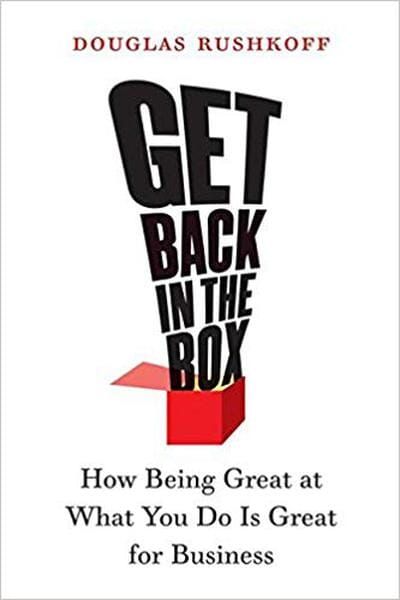
Get Back in the Box Book Summary
In 'Get Back in the Box', Douglas Rushkoff challenges the relentless embrace of technology in our lives, urging us to reconnect with the tangible world. He explores the idea that true innovation originates not from flashy gadgets, but from understanding and enhancing our existing systems. Rushkoff uses vivid anecdotes and sharp insights to illustrate how businesses and individuals can find deeper fulfillment by focusing on the core values that matter. This thought-provoking journey prompts readers to reconsider their relationship with technology and its role in their lives. Are you ready to step back, reflect, and rediscover what's truly essential?
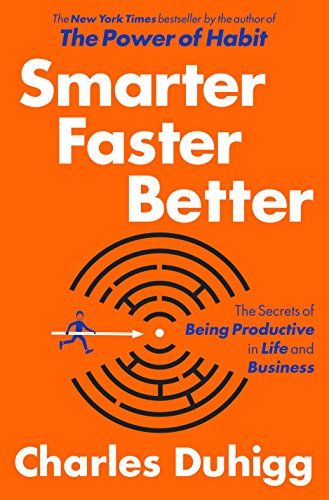
Smarter Faster Better Book Summary
In 'Smarter Faster Better', Charles Duhigg explores the science of productivity and the habits that lead to greater efficiency. With fascinating real-world examples, he reveals how understanding motivation, focus, and decision-making can transform our approach to work and life. Duhigg presents a new framework that encourages creativity and innovation, challenging conventional wisdom about being productive. This engaging read uncovers the psychological mechanisms behind why some people and organizations excel while others struggle. Dive in to discover actionable insights that could revolutionize your productivity and ignite your potential!

The Circadian Code Book Summary
In 'The Circadian Code,' Satchin Panda explores the pivotal role our internal clocks play in health and well-being. He reveals groundbreaking research that shows how timing our meals and activities can enhance metabolic health and reduce disease risk. With practical tips and insights, Panda empowers readers to harness the power of circadian rhythms in their daily lives. This journey into the science of timing may just change how you approach food, sleep, and lifestyle. Dive in to discover how the simple act of aligning your day with your body's natural rhythms can unlock a healthier you!
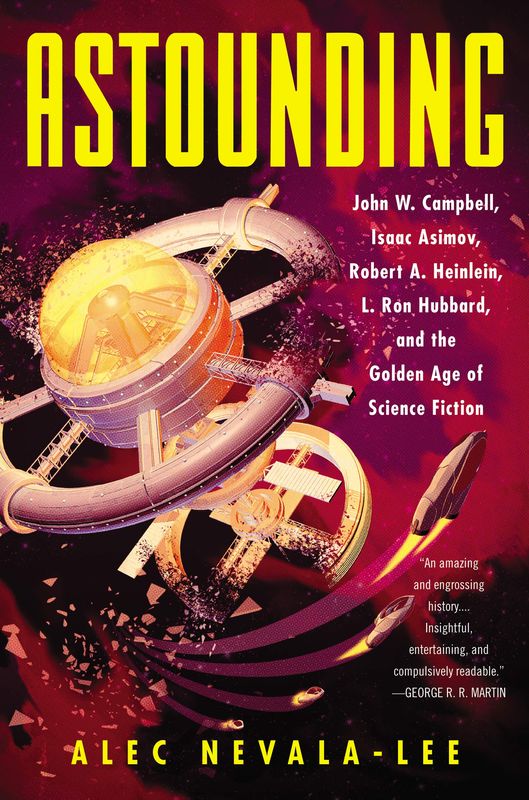
Astounding Book Summary
'Astounding' by Alec Nevala-Lee delves into the golden age of science fiction, exploring the life and legacy of the influential magazine Astounding Science Fiction. It uncovers the stories of legendary authors like Isaac Asimov and Robert A. Heinlein, whose imaginative works shaped modern storytelling. The narrative oscillates between personal anecdotes and historical events, revealing the profound impact of science fiction on culture and technology. As secrets of the genre's creation are unveiled, readers are invited to consider how these visionary tales have foretold our future. A captivating blend of biography and cultural critique, this book promises to astound and inspire.

Blue Is the Warmest Color Book Summary
In 'Blue Is the Warmest Color', Julie Maroh explores the passionate love story between two young women, Clémentine and Emma. As Clémentine navigates her identity and sexuality, the vibrant blue colors in their world symbolize the depth of their connection. The graphic novel intricately captures the struggles of acceptance, heartbreak, and the beauty of first love. Through poignant illustrations and a heartfelt narrative, readers are taken on a journey of self-discovery and the complexities of love. This tender tale leaves a lasting impression, inviting readers to reflect on their own relationships and the colors that define them.
Showing 8 of 20 similar books
Take your reading experience to the next level
Download our mobile app to enjoy your favorite books on the go. Get access to exclusive features, offline listening, and personalized recommendations.

Similar Book Recommendations →

Alex Lieberman's Book Recommendations
Alex Lieberman is the co-founder and executive chairman of Morning Brew, a media company that delivers engaging business news. Under his leadership, Morning Brew has grown to reach millions of subscribers, becoming a significant player in modern business journalism. Lieberman is also known for his insightful commentary on entrepreneurship and media trends. His work has significantly influenced the way business news is consumed by younger audiences. Beyond Morning Brew, Lieberman frequently writes and speaks about the intersection of media and technology, further cementing his role as a thought leader in the industry.

Lex Fridman's Book Recommendations
Lex Fridman is an artificial intelligence researcher, podcaster, and MIT professor, known for his work in autonomous vehicles, robotics, and deep learning. Fridman has gained widespread popularity through his podcast, Lex Fridman Podcast, where he interviews leading thinkers in science, technology, and philosophy, exploring topics like AI, consciousness, and the future of humanity. His academic work focuses on human-centered AI, aiming to create machines that can better understand and interact with humans. Fridman’s ability to distill complex topics into accessible conversations has earned him a large following, and his podcast is known for its thoughtful, in-depth discussions with some of the brightest minds of our time. He is also an advocate for the responsible development of AI, emphasizing the ethical implications of this rapidly advancing technology. Outside of academia and podcasting, Fridman is a practitioner of jiu-jitsu and frequently speaks about the importance of discipline and continuous learning.
Anu Hariharan's Book Recommendations
Anu Hariharan is a distinguished partner at Y Combinator's Continuity Fund, where she has been instrumental in scaling numerous startups into successful enterprises. With a strong background in economics and technology, she has become a respected voice in the venture capital community. Hariharan has also made significant contributions through her writing on startup growth and investment strategies, offering insightful analyses and practical advice to entrepreneurs. Her work is frequently featured in leading business publications, showcasing her expertise in the tech industry. Beyond her professional accomplishments, Hariharan is committed to fostering diversity and inclusion within the startup ecosystem.

Daniel Ek's Book Recommendations
Daniel Ek is a Swedish entrepreneur and co-founder of Spotify, the world’s leading music streaming platform. Ek revolutionized the music industry by offering a legal, user-friendly alternative to piracy, and Spotify has since become the dominant player in the streaming market. Under his leadership, Spotify has expanded globally, offering access to millions of songs and podcasts while reshaping how artists distribute their work. Ek is known for his forward-thinking approach to technology and his commitment to evolving Spotify’s platform for both users and creators. He continues to lead Spotify as it explores new innovations in audio entertainment.

Anthony Pompliano's Book Recommendations
Anthony Pompliano, also known as "Pomp," is a prominent entrepreneur and investor focused on the cryptocurrency and blockchain sectors. He co-founded Morgan Creek Digital, an investment firm dedicated to blockchain technology and digital assets. Pomp is also well-known for his popular newsletter, "The Pomp Letter," where he shares insights on finance, technology, and the future of money. As a prolific voice in the crypto community, he has appeared on multiple media platforms, including his own podcast, "The Pomp Podcast," where he interviews industry leaders and innovators. Through his writings and public engagements, Pompliano has significantly contributed to the broader understanding and adoption of digital currencies.

Warren Buffett's Book Recommendations
Warren Buffett, known as the “Oracle of Omaha,” is one of the most successful investors of all time and the chairman of Berkshire Hathaway. His investment philosophy, centered on value investing and long-term wealth creation, has made him one of the wealthiest people in the world. Buffett is also known for his philanthropic efforts, having pledged to donate a significant portion of his wealth to charitable causes. His annual letters to shareholders are highly anticipated for their financial wisdom. Buffett remains a revered figure in business and investing circles.

Casey Neistat's Book Recommendations
Casey Neistat is a renowned American filmmaker, vlogger, and co-founder of the multimedia company Beme, which was later acquired by CNN. He gained widespread recognition for his innovative and highly influential YouTube vlogs, which have garnered millions of subscribers and views. Neistat's storytelling prowess and creative filming techniques have earned him a Shorty Award for Best YouTube Star and several Streamy Awards. Beyond his digital presence, he has contributed to literature through essays and thought pieces on creativity and the impact of social media. Neistat's work continues to inspire a new generation of content creators and filmmakers.
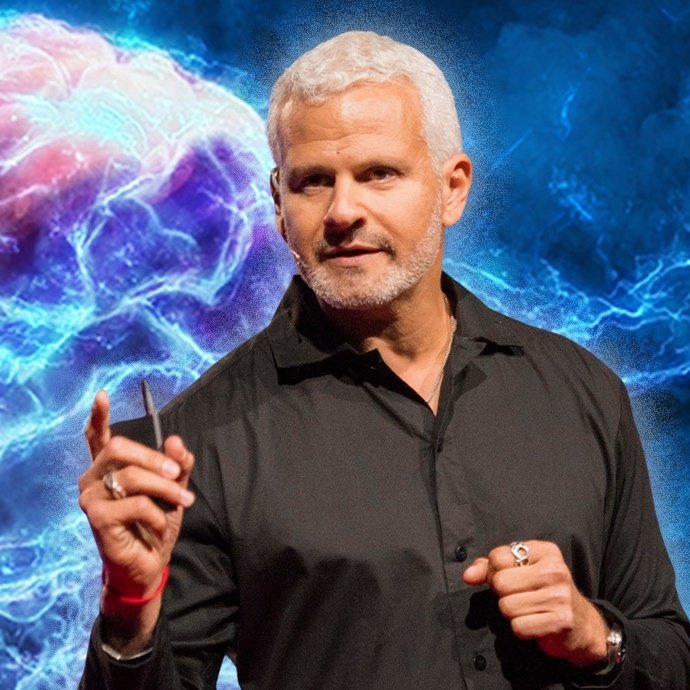
Adam Gazzaley's Book Recommendations
Adam Gazzaley is a renowned neuroscientist and author known for his groundbreaking work in cognitive neuroscience, particularly in the realms of attention and memory. He is the founding director of the Neuroscape Lab at the University of California, San Francisco, where he pioneers innovative approaches to brain health, including video game-based therapies. Gazzaley co-authored the influential book "The Distracted Mind: Ancient Brains in a High-Tech World," which explores the impact of modern technology on our cognitive capabilities. His work has earned him numerous accolades, including the Society for Neuroscience's Young Investigator Award. Gazzaley's contributions have significantly advanced our understanding of how technology can both challenge and enhance cognitive function.
Showing 8 of 12 related collections
“"Bitcoin is a form of decentralized money that challenges the traditional financial system, offering individuals empowerment and the ability to take control of their own wealth."”
The Bitcoin Standard
By Saifedean Ammous
Frequently Asked Questions
Explore Our Catalogue
Discover a world of knowledge through our extensive collection of book summaries.
Genres
Genres
Genres
Featured Collections
- Top Book Club Picks
- One-Stop Nutrition
- Summer Reads 2024
- Best Beach Reads 2024
- Work-Life Balance Guide
- Time Management
- Healthy Foods
- Entrepreneur Toolkit
- Mind & Body Wellness
- Future Tech Insights
- Leadership Essentials
- Financial Freedom
- Sci-Fi Masterpieces
- Parenting 101
- Books That Became Blockbusters
- Guide to a Healthy Pregnancy