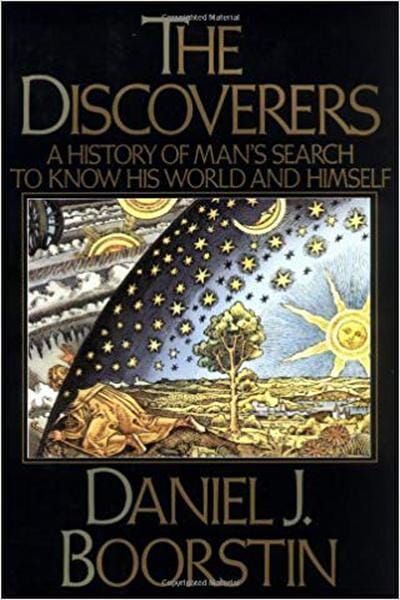

Start Listening to Book Summary
Book Review of The Discoverers
An original history of man's greatest adventure: his search to discover the world around him. "From the Trade Paperback edition.
Book Overview of The Discoverers
About the Book Author
Daniel Joseph Boorstin
Daniel Joseph Boorstin (1914-2004) was an American historian, attorney, and author known for his insightful exploration of American history and culture. He served as the Librarian of Congress from 1975 to 1987 and was a prominent figure in the field of American studies. Boorstin's notable works include 'The Discoverers', 'The Creators', and 'The Americans', a trilogy that examines the American experience from various perspectives. Renowned for his clear, engaging prose and comprehensive research, he often intertwined historical narrative with cultural commentary, making complex ideas accessible to a broad audience.
Book Details
Key information about the book.
- Authors
- Daniel Joseph Boorstin
- Published
- January 1983
- Publisher
- Random House (NY)
- ISBN
- N/A
- Language
- English
- Pages
- 776
- Genres
- HistoryHistorical Figures
Purchase Options
 Buy on Amazon
 Buy via BookShop
Support local bookstores: BookShop gives a portion of each sale to independent bookshops!
Similar books you might like →
A Brief History of Time Book Summary
In "A Brief History of Time," Stephen Hawking takes readers on a captivating journey through the cosmos, exploring the nature of time, black holes, and the universe's beginnings. With stunning clarity, he unravels complex scientific concepts, inviting everyone—from curious laypersons to seasoned physicists—to ponder the mysteries of existence. Hawking's charismatic storytelling challenges our perceptions of reality and time itself, posing profound questions about the universe's fate. As he merges science with philosophy, the reader is compelled to reflect on their place in a vast, enigmatic cosmos. Prepare to be inspired and awed by a narrative that transcends mere facts, pushing the boundaries of human understanding.
Sum Book Summary
In 'Sum,' David Eagleman takes readers on a journey through the afterlife, presenting a series of imaginative vignettes that explore the myriad possibilities of existence beyond death. Each scenario forces readers to confront deep questions about identity, consciousness, and the essence of what it means to be human. Eagleman's captivating prose blends science and philosophy, inviting us to envision alternate realities that challenge our conventional beliefs. With its blend of creativity and introspection, 'Sum' promises to expand your mind and spark your imagination. Are you ready to explore what lies beyond the final curtain?
Talent Wins Book Summary
In 'Talent Wins', renowned authors Ram Charan, Dominic Barton, and Dennis Carey unveil the pivotal role talent plays in driving organizational success. They argue that traditional strategies fall short without a focus on attracting and nurturing exceptional people. Through compelling case studies and actionable insights, the book reveals how companies can create a competitive edge by investing in their human resources. A must-read for leaders, it challenges readers to rethink their approach to talent management. Can organizations truly thrive in the future without recognizing talent as their most valuable asset?

The Method Method Book Summary
In 'The Method Method', the founders of Method unleash a revolutionary approach to green consumerism and business practices. They detail their journey from a simple idea to a thriving eco-friendly brand, challenging the status quo of the cleaning products industry. With candid anecdotes and innovative strategies, the authors illustrate how to blend environmental responsibility with effective marketing. Readers will discover the powerful intersection of branding and sustainability, and how purpose-driven initiatives can reshape markets. This book isn't just a guide for businesses; it's a call to action for conscious consumers and aspiring entrepreneurs alike.


Gone Girl Book Summary
In a marriage filled with deception, Nick Dunne becomes the prime suspect in the sudden disappearance of his wife, Amy. As the media frenzy escalates, hidden truths and shocking secrets emerge, revealing the labyrinth of their relationship. Flynn's masterful narrative twists and turns keep readers guessing at every page. Just when you think you understand the characters, they pull you deeper into their web of lies. Can love survive the ultimate betrayal, or is it merely a façade?

End Emotional Eating Book Summary
In 'End Emotional Eating,' Jennifer Taitz unveils the psychological traps that lead us to seek comfort in food. Through powerful insights and practical strategies, she empowers readers to break free from the cycle of emotional eating. With a blend of compassion and science, Taitz guides us in understanding our cravings and retraining our minds for healthier habits. This transformative journey challenges you to reconnect with your emotions and find fulfillment beyond the plate. Are you ready to discover a new way to nourish your body and soul?

100 Tricks to Appear Smart in Meetings Book Summary
In '100 Tricks to Appear Smart in Meetings', Sarah Cooper reveals the clever art of navigating workplace gatherings with wit and humor. This satirical guide offers a treasure trove of quick, quirky tactics designed to give you the illusion of expertise. Learn how to nod thoughtfully, sprinkle jargon like confetti, and employ the power of strategic silence to captivate your audience. With each trick, readers are invited to laugh at the absurdity of corporate culture while also gaining a stealthy edge in their professional lives. Dive into this playful roadmap to success, where looking smart can be just as fun as knowing your stuff!
Showing 8 of 30 similar books
Take your reading experience to the next level
Download our mobile app to enjoy your favorite books on the go. Get access to exclusive features, offline listening, and personalized recommendations.

Similar Book Recommendations →

Chelsea Handler's Book Recommendations
Chelsea Handler is an American comedian, actress, author, and talk show host, best known for her late-night talk show Chelsea Lately on E!. Handler's bold, unapologetic humor and outspoken views on politics, gender, and social issues have made her a prominent figure in comedy and media. In addition to her TV career, she has written several best-selling books, including Are You There, Vodka? It’s Me, Chelsea, and has been a strong advocate for political activism and mental health awareness. Handler continues to be a leading voice in entertainment and social commentary, using her platform to challenge norms and promote change.

Barack Obama's Book Recommendations
Barack Obama is the 44th President of the United States, serving from 2009 to 2017. As the first African American president, Obama’s leadership marked a historic moment in American history. His administration focused on healthcare reform, economic recovery from the Great Recession, and environmental policies. He is best known for the Affordable Care Act, as well as his efforts to expand civil rights and restore diplomatic relations with Cuba. Since leaving office, Obama has continued to engage in public life through his foundation, focusing on leadership development, civic engagement, and global issues.

Oprah Winfrey's Book Recommendations
Oprah Winfrey is a globally renowned media mogul, talk show host, and philanthropist. She gained fame through her groundbreaking talk show, "The Oprah Winfrey Show," which ran for 25 years and became one of the highest-rated programs in television history. Winfrey has significantly impacted literature through her influential book club, Oprah's Book Club, which has propelled numerous books to bestseller status and fostered a love of reading across diverse audiences. She is also the author of several books, including her memoir "The Life You Want," and has contributed to numerous inspirational and self-help publications. Beyond her literary contributions, Winfrey has been a powerful advocate for education and empowerment, founding the Oprah Winfrey Leadership Academy for Girls in South Africa.

Aaron Levie's Book Recommendations
Aaron Levie is the co-founder and CEO of Box, a cloud content management platform that revolutionized how businesses manage and collaborate on content. He launched Box in 2005 while still a college student, and the company rapidly grew into a leader in the cloud storage industry. Levie is known for his innovative, forward-thinking approach to enterprise software and for pushing the boundaries of digital transformation. Under his leadership, Box went public in 2015 and continues to evolve with new technologies and partnerships. He is a strong advocate for cloud-first business strategies and frequently shares his insights on the future of work and the digital workplace. Levie is also a prolific speaker and writer, often discussing technology's role in the modern economy. His energetic and witty personality has made him a popular figure in Silicon Valley and beyond.

David Deutsch's Book Recommendations
David Deutsch is a British physicist and philosopher, widely known for his contributions to quantum mechanics, particularly in the area of quantum computation. He is the author of The Fabric of Reality and The Beginning of Infinity, where he explores the nature of knowledge, progress, and the future of human civilization. Deutsch’s work in quantum computing laid the groundwork for the development of quantum algorithms, positioning him as a pioneer in this emerging field. He is a proponent of the multiverse theory and has offered profound insights into the nature of reality, science, and human potential. Deutsch’s philosophical work emphasizes the power of reason and creativity in solving problems and expanding human understanding. His ideas have had a significant impact on the fields of theoretical physics and epistemology, making him a leading thinker on the future of science and technology. He continues to inspire both scientists and lay readers with his optimistic vision of a world shaped by knowledge and innovation.

Bill Gates's Book Recommendations
Bill Gates, co-founder of Microsoft Corporation, is a pioneering figure in the tech industry, having played a key role in the personal computer revolution. His work at Microsoft, particularly the development of Windows, transformed software and computing globally. Beyond his technology contributions, Gates is also a prolific author, with notable works such as "The Road Ahead" and "Business @ the Speed of Thought," which offer insights into the future of technology and business. Additionally, his philanthropic efforts through the Bill & Melinda Gates Foundation have had a profound impact on global health, education, and poverty. Gates continues to influence both technology and literature with his forward-thinking perspectives and innovative ideas.

Bob Iger's Book Recommendations
Bob Iger is an American business executive and the former CEO of The Walt Disney Company, where he led the company through a period of unprecedented growth and innovation. Under Iger’s leadership, Disney acquired major brands like Pixar, Marvel, Lucasfilm, and 21st Century Fox, expanding its portfolio and creating one of the largest entertainment empires in the world. Iger is also credited with launching the Disney+ streaming service, which has become a key player in the digital entertainment space. His leadership style is known for its focus on creativity, long-term vision, and strategic acquisitions. Iger’s tenure at Disney solidified his reputation as one of the most successful and influential media executives.

Austen Allred's Book Recommendations
Austen Allred is an influential entrepreneur and author, best known for his contributions to the education technology sector. He co-founded Lambda School, a groundbreaking online coding bootcamp that offers deferred tuition and has revolutionized access to tech education. In addition to his entrepreneurial ventures, Allred is the author of "The Grassfed Startup," which provides insights into building sustainable businesses. His innovative approach to education has earned him recognition as a thought leader in the tech industry. Allred continues to inspire with his commitment to making high-quality education accessible to all.
Showing 8 of 12 related collections
Frequently Asked Questions
Explore Our Catalogue
Discover a world of knowledge through our extensive collection of book summaries.
Genres
Genres
Genres
Featured Collections
- Top Book Club Picks
- One-Stop Nutrition
- Summer Reads 2024
- Best Beach Reads 2024
- Work-Life Balance Guide
- Time Management
- Healthy Foods
- Entrepreneur Toolkit
- Mind & Body Wellness
- Future Tech Insights
- Leadership Essentials
- Financial Freedom
- Sci-Fi Masterpieces
- Parenting 101
- Books That Became Blockbusters
- Guide to a Healthy Pregnancy