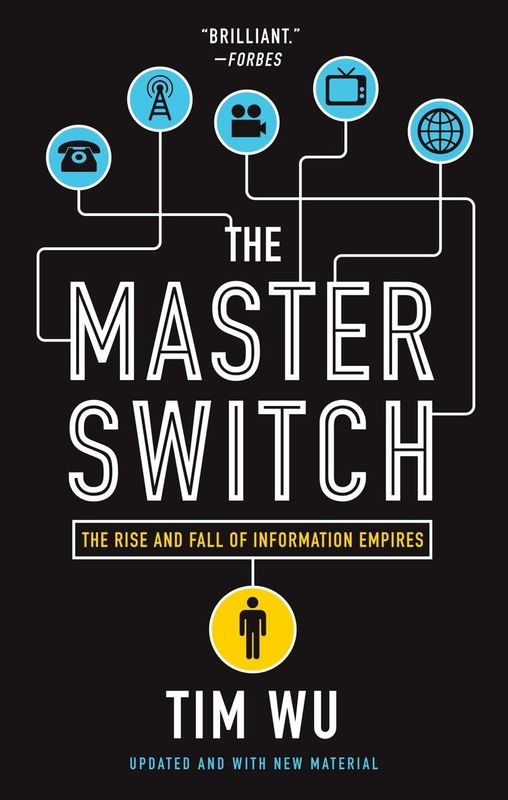

In 'The Master Switch', Tim Wu explores the cyclical nature of technology and its regulation, revealing how the very innovations that empower society often fall into the hands of monopolies. With captivating historical examples, Wu illustrates the rise and fall of media empires, shedding light on how the internet is poised for a similar fate. He poses thought-provoking questions about the future of communication and control in an increasingly digitized world. As he examines the interplay between innovation and censorship, readers are left to ponder who truly holds the power in our connected age. Will we learn from the past, or are we destined to repeat it?
By Tim Wu
Published: 2011
""The cycle of innovation and control is relentless—those who create technology often find themselves in the grip of it.""
A New Yorker and Fortune Best Book of the Year "A must-read for all Americans who want to remain the ones deciding what they can read, watch, and listen to.” —Arianna Huffington Analyzing the strategic maneuvers of today’s great information powers—Apple, Google, and an eerily resurgent AT&T—Tim Wu uncovers a time-honored pattern in which invention begets industry and industry begets empire. It is easy to forget that every development in the history of the American information industry—from the telephone to radio to film—once existed in an open and chaotic marketplace inhabited by entrepreneurs and utopians, just as the Internet does today. Each of these, however, grew to be dominated by a monopolist or cartel. In this pathbreaking book, Tim Wu asks: will the Internet follow the same fate? Could the Web—the entire flow of American information—come to be ruled by a corporate leviathan in possession of "the master switch"? Here, Tim Wu shows how a battle royale for the Internet’s future is brewing, and this is one war we dare not tune out.
Showing 8 of 30 similar books
Charlie Munger is an American investor, businessman, and philanthropist, best known as the vice chairman of Berkshire Hathaway, where he partners with Warren Buffett. Renowned for his insights on investment strategies and mental models, Munger has significantly influenced the world of finance. His notable literary contributions include "Poor Charlie's Almanack," a compilation of his speeches and writings that distill his wisdom on decision-making and business principles. Munger's work emphasizes the importance of multidisciplinary thinking and continuous learning. Beyond his financial acumen, he is celebrated for his charitable efforts, particularly in education and healthcare.
Barack Obama is the 44th President of the United States, serving from 2009 to 2017. As the first African American president, Obama’s leadership marked a historic moment in American history. His administration focused on healthcare reform, economic recovery from the Great Recession, and environmental policies. He is best known for the Affordable Care Act, as well as his efforts to expand civil rights and restore diplomatic relations with Cuba. Since leaving office, Obama has continued to engage in public life through his foundation, focusing on leadership development, civic engagement, and global issues.
Bridget Phetasy is a multi-talented writer, comedian, and podcaster known for her sharp wit and insightful commentary on contemporary culture and politics. She gained prominence through her work with Playboy, where her essays and columns attracted a wide readership. Bridget is the host of the popular podcast "Walk-Ins Welcome," where she engages in deep, humorous conversations with a variety of guests. Her candid and often provocative takes on societal issues have garnered her a loyal following on social media. Additionally, she created the satirical YouTube series "Dumpster Fire," where she humorously dissects current events.
Aileen Lee is a distinguished venture capitalist and founder of Cowboy Ventures, a seed-stage venture capital firm that invests in early-stage technology companies. She is widely known for coining the term "unicorn" to describe startups valued at over $1 billion, significantly impacting how the tech industry views high-growth companies. Lee's keen eye for innovation and her advocacy for diversity in tech have made her a prominent figure in Silicon Valley. Beyond her financial acumen, she has authored insightful articles on entrepreneurship and startup culture, contributing valuable perspectives to business literature. Lee's work continues to inspire a new generation of entrepreneurs and investors.
Andrew Chen is a venture capitalist, entrepreneur, and thought leader in growth marketing, currently serving as a general partner at Andreessen Horowitz. Chen is known for his expertise in network effects, viral growth strategies, and marketplace dynamics, making him a sought-after advisor for startups looking to scale. Prior to joining Andreessen Horowitz, he worked in leadership roles at Uber, helping to grow the ride-sharing platform’s user base and develop key growth strategies. Chen is also a prolific writer, sharing his insights on growth, technology, and startups through his popular blog and newsletter, which has attracted a loyal following in the tech community. His work has helped shape how many startups approach user acquisition, retention, and product-market fit. As a venture capitalist, Chen focuses on early-stage companies in the consumer internet, SaaS, and marketplace sectors, and he has been involved in funding and advising several successful startups. His insights on technology and growth continue to influence both founders and investors alike.
Daniel Petre is a distinguished Australian entrepreneur, author, and philanthropist known for his impactful contributions to the business and literary worlds. He co-founded the venture capital firm AirTree Ventures, which has significantly influenced the technology startup ecosystem in Australia. Petre has authored several influential books on technology and leadership, including "The Clever Country?" and "Father Time," which explore themes of innovation and work-life balance. His writing often reflects his deep commitment to shaping a forward-thinking, inclusive society. Beyond his literary and business endeavors, Petre is also recognized for his substantial philanthropic efforts, particularly in education and healthcare.
David Perell is a prominent writer and educator known for his influential work in the field of online education and digital writing. He is the creator of "Write of Passage," an acclaimed online writing course that has helped thousands of students refine their writing skills and build their personal brands. As a prolific blogger, Perell shares insights on topics ranging from technology and culture to productivity and creativity. His thought-provoking essays and articles have garnered a substantial following, establishing him as a thought leader in the digital age. Additionally, Perell hosts the popular "North Star Podcast," where he interviews leading thinkers and creators, further contributing to contemporary intellectual discourse.
Bill Gates, co-founder of Microsoft Corporation, is a pioneering figure in the tech industry, having played a key role in the personal computer revolution. His work at Microsoft, particularly the development of Windows, transformed software and computing globally. Beyond his technology contributions, Gates is also a prolific author, with notable works such as "The Road Ahead" and "Business @ the Speed of Thought," which offer insights into the future of technology and business. Additionally, his philanthropic efforts through the Bill & Melinda Gates Foundation have had a profound impact on global health, education, and poverty. Gates continues to influence both technology and literature with his forward-thinking perspectives and innovative ideas.
Showing 8 of 11 related collections
“"The cycle of innovation and control is relentless—those who create technology often find themselves in the grip of it."”
The Master Switch
By Tim Wu
Discover a world of knowledge through our extensive collection of book summaries.
Tim Wu is a prominent legal scholar, professor, and author known for his insightful analysis of technology and media. He is the author of notable works such as 'The Master Switch: The Rise and Fall of Information Empires,' which explores the history and future of communication industries, and 'The Attention Merchants: The Epic Scramble to Get Inside Our Heads,' which critiques the economy of attention in the digital age. Wu's writing style is characterized by its clarity, depth, and ability to intertwine complex legal concepts with engaging narratives. As a professor at Columbia Law School, he continues to influence discussions around technology policy and civil liberties.
Key information about the book.
 Buy on Amazon
 Buy via BookShop
Support local bookstores: BookShop gives a portion of each sale to independent bookshops!
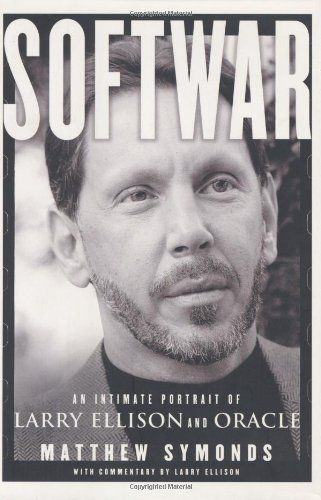
'Softwar' by Matthew Symonds delves into the intricate and often secretive world of software development amidst global geopolitics. As nations harness technology for power, the narrative reveals how software now plays a crucial role in warfare and diplomacy. With insider stories and vivid characters, Symonds illustrates the intersection of cyberspace and the physical world, raising questions about ethics and control. The book challenges readers to consider the implications of a technology-driven future shaped by both innovation and conflict. Will the next conflict be fought not on battlegrounds, but in the software that powers our lives?
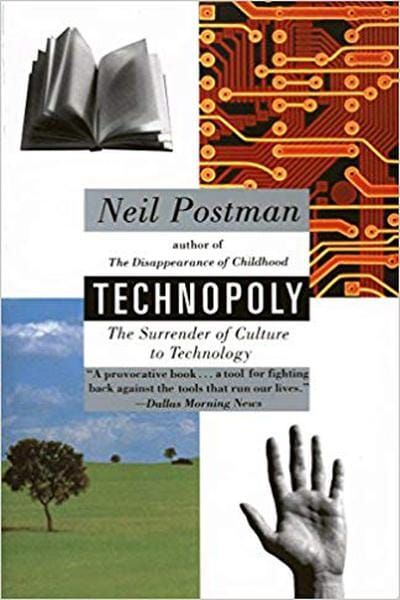
In 'Technopoly,' Neil Postman explores the complex relationship between technology and culture, arguing that society's obsession with technology can lead to a dangerous loss of critical thought and human values. He illustrates how technological advancements can dominate cultural discourse, making other perspectives obsolete. Postman warns that as we become increasingly reliant on technology, we risk losing essential skills like reasoning and communication. With a keen eye for the implications of technological dominance, he urges readers to reflect on the values that should guide technological progress. This provocative examination challenges us to consider whether we are the masters of our creations or merely servants to them.
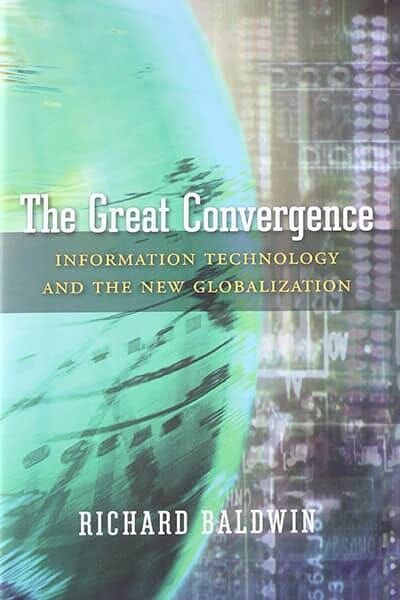
In 'The Great Convergence,' Richard Baldwin takes readers on a compelling journey through the forces shaping our global economy, emphasizing the revolutionary impact of digital technology. He argues that the convergence of production and consumption is redefining international borders and reshaping global trade. As we become more interconnected than ever, Baldwin raises critical questions about the future of jobs and economic disparity. Will the merging of markets lead to prosperity, or will it deepen existing divides? A thought-provoking exploration that challenges conventional wisdom and invites readers to rethink the implications of our rapidly changing world.
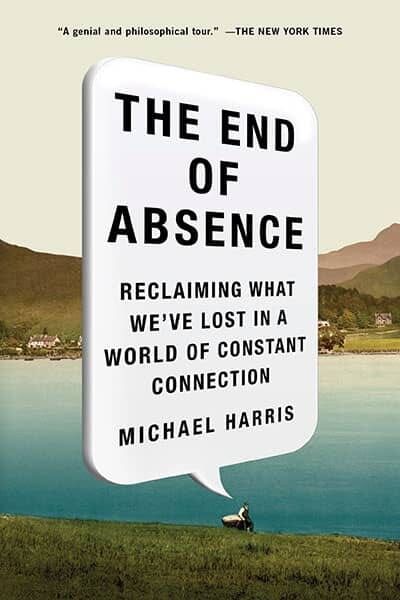
In 'The End of Absence,' Michael John Harris explores the paradox of constant connectivity in our digital age. As he nostalgically reflects on a time when absence was a natural state, he questions how technology reshapes our experiences and relationships. Through personal anecdotes and cultural analysis, Harris invites readers to ponder what we lose in a world devoid of solitude. This thought-provoking narrative challenges us to reconsider our attachment to screens and the significance of being truly present. Will we ever rediscover the value of absence in our hyper-connected lives?
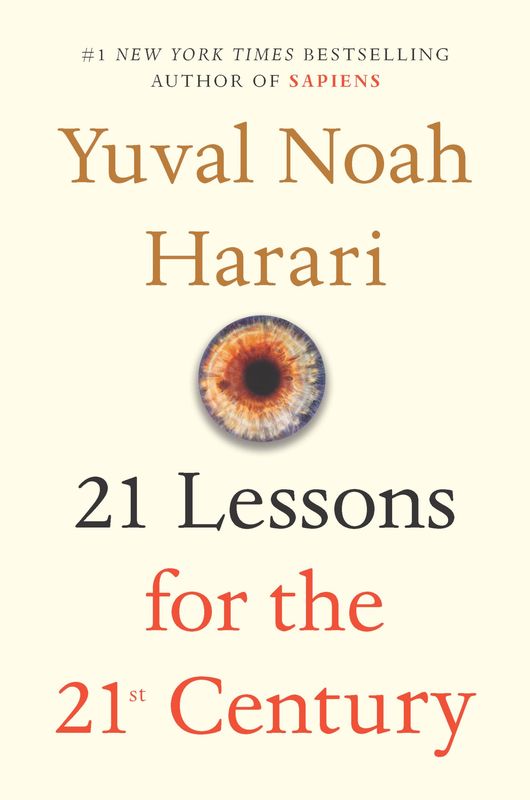
In '21 Lessons for the 21st Century', Yuval Noah Harari navigates the complex landscape of today's world, tackling urgent questions about our future. From the impact of technology on society to the challenges of political stability, each lesson provokes thought and introspection. Harari explores key themes such as the rise of artificial intelligence, the significance of data, and the importance of meaning in an increasingly uncertain world. With a blend of history, philosophy, and science, the book invites readers to reflect on their roles in shaping a shared future. Will we adapt, or become obsolete? Dive in to uncover the lessons that could redefine humanity's path.
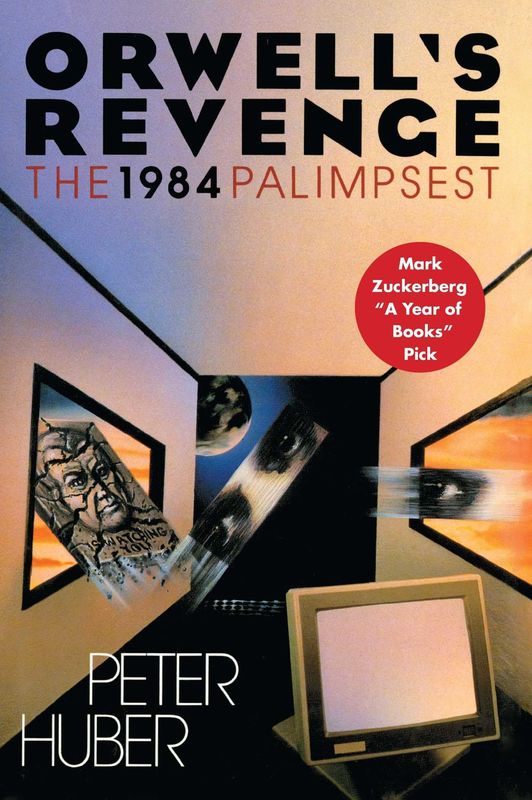
In 'Orwell's Revenge', Peter Huber delves into an intriguing exploration of surveillance and personal freedom in a modern context. Drawing inspiration from George Orwell's dystopian visions, Huber challenges readers to confront the implications of technology in our daily lives. As he paints a portrait of a world where privacy is vanishing, he raises provocative questions about government control and individual autonomy. This gripping narrative weaves together fact and speculation, leaving the reader questioning the fabric of reality itself. Will we succumb to Orwell's prophecy, or can we reclaim our freedom in an age of constant observation?
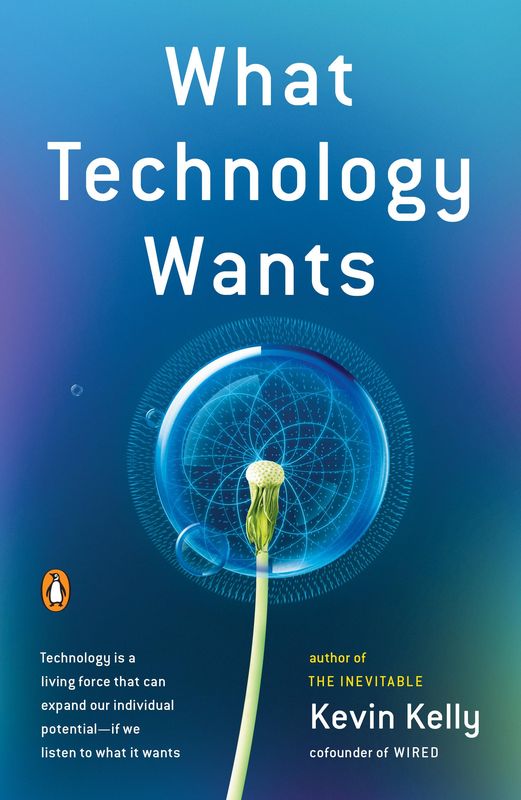
In "What Technology Wants," Kevin Kelly delves into the deep interplay between humanity and technology, suggesting that technology is an extension of life itself. He argues that just like biological evolution, technology has its own agenda and desires, shaping our future in profound ways. Through a blend of philosophical insights and real-world examples, Kelly reveals how technological advancements reflect our aspirations and fears. As he explores the notion of 'the technium'—a vast, interconnected web of technology—readers are invited to reconsider their relationship with the tools they create. This thought-provoking journey challenges us to embrace technology as a living entity that influences and drives our evolution.
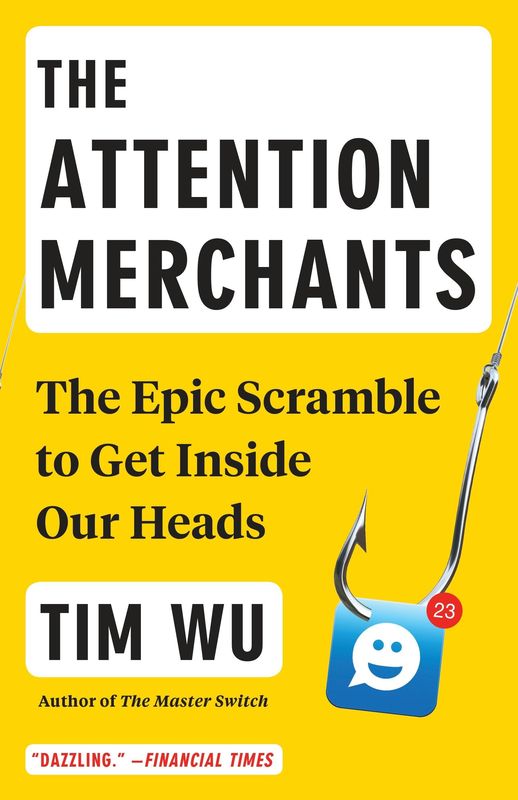
In 'The Attention Merchants,' Tim Wu unveils the captivating history of how our attention has become the most valuable commodity in the modern world. From the dawn of advertising to the rise of social media, Wu meticulously chronicles the evolution of industries that thrive on capturing and selling our focus. As he exposes the tactics employed by powerful corporations, readers are compelled to question the very nature of their relationship with technology and media. With sharp insights and engaging narratives, Wu challenges us to consider the cost of distraction and the importance of reclaiming our attention. This thought-provoking journey leaves readers pondering: can we resist the lure of the attention economy?








Download our mobile app to enjoy your favorite books on the go. Get access to exclusive features, offline listening, and personalized recommendations.